




Introduction:
Welcome back to our channel! Today, we’re diving into one of the most important topics in the energy storage industry: battery cycle life and State of Health (SOH). Whether you're an energy professional, an enthusiast, or just curious about how energy storage systems work, this video will give you a clear understanding of how lithium batteries perform over time, and why these factors are crucial for maximizing your system's lifespan.
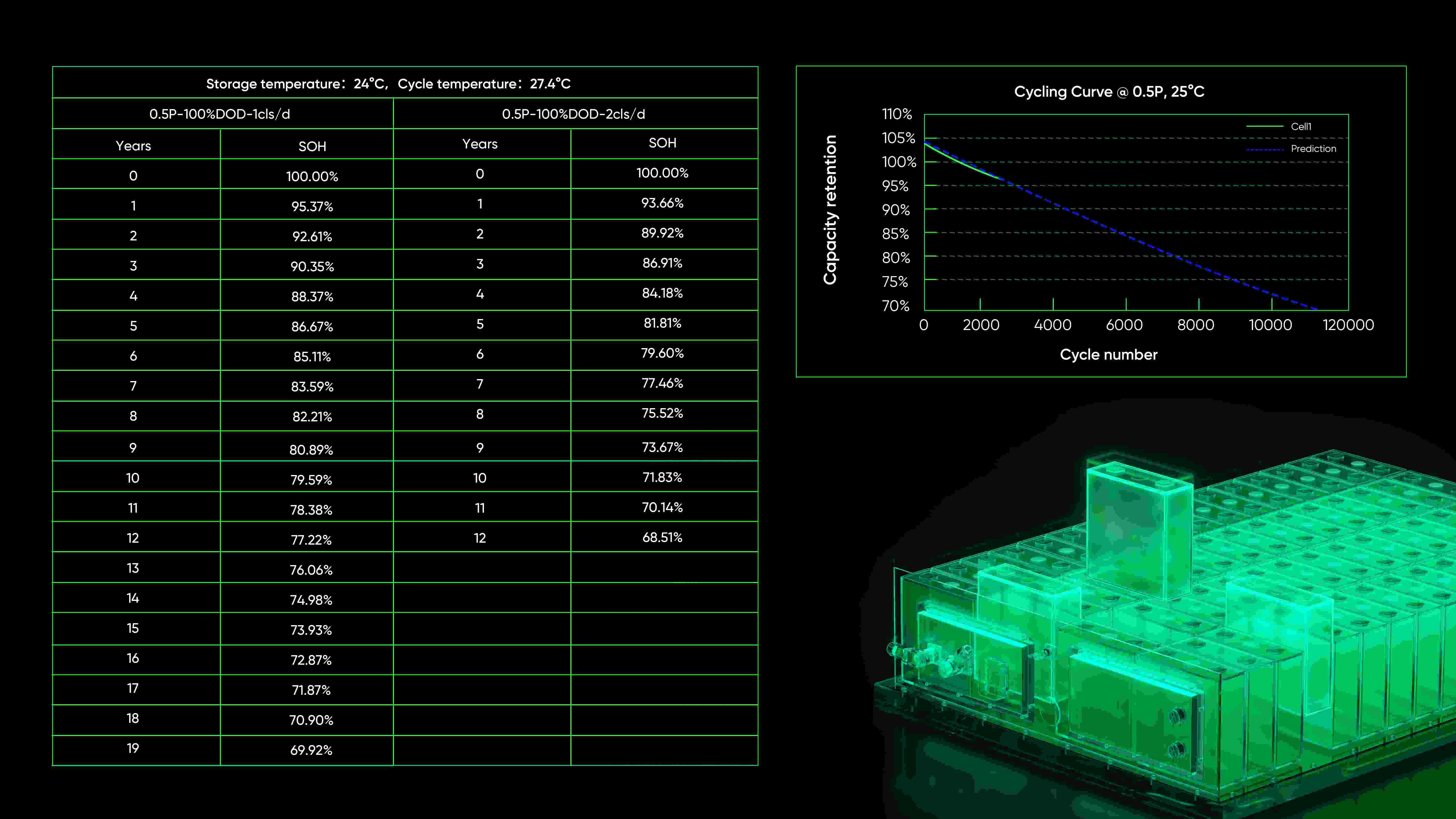
In today’s vlog, we’ll explore data from a lithium battery cycling test, such as the one shown here, and discuss its relevance to energy storage systems. From cycle life to capacity retention, we’ll break down how these factors impact battery performance and what they mean for your energy storage solutions.
Understanding Battery Cycle Life and SOH
At the heart of every energy storage system are the lithium-ion batteries. These batteries undergo cycles of charging and discharging, which affects their overall performance. In the graph you see on the screen, we’ll explore capacity retention over time, along with the State of Health (SOH) of the cells.
-Cycle Life: This refers to the number of charge and discharge cycles a battery can go through before its capacity significantly degrades. The graph shows the cycling curve at a depth of discharge (DOD) of 0.5C, which simulates how much energy is withdrawn from the battery during each cycle.
-State of Health (SOH): This is a measure of the battery’s current capacity relative to its original design capacity. It indicates how well the battery is performing over its lifespan. SOH is a critical factor in evaluating the efficiency of energy storage systems in industries like solar storage, backup power systems, and microgrids.
Key Insights from the Data
Looking at the data table, we can see that SOH starts at 100% for a new battery (Year 0) and gradually declines over time as the battery undergoes charge-discharge cycles.
-At the 1-year mark, the SOH drops to about 95.37% under a standard cycling condition of 0.5P and 100% DOD (Depth of Discharge) with a 1 cycle per day rate.
-By Year 5, the SOH decreases to 86.67%. This is typical of lithium-ion batteries, where performance begins to degrade more noticeably after a few years of use.
-At Year 12, the SOH is 68.51%. This highlights how important it is to properly manage your battery’s cycle life and ensure it’s being used within optimal parameters to extend its life.
From the cycling curve in the upper-right corner of the image, we can predict that after approximately 10,000 cycles (based on the graph), the battery will retain around 70% of its original capacity. This is a general trend for many lithium-ion cells when used at 0.5P with a moderate 100% DOD cycling rate. This is essential knowledge when planning for long-term energy storage projects.
Why Does This Matter for Energy Storage Systems?
Now, you may be wondering: What does this mean for your energy storage system?
Extended Lifespan of Energy Storage Systems: Understanding the impact of cycle life and SOH is key to optimizing battery performance and planning for maintenance or replacement. By tracking SOH and ensuring that your batteries are not subjected to excessive DOD, you can prolong the life of your system and reduce operating costs.
Maximizing Efficiency: For energy-intensive applications such as solar power storage or industrial backup systems, maintaining a battery’s health is crucial for ensuring that energy is stored and delivered efficiently when needed the most. The higher the SOH, the better the system’s overall performance.
Cost Savings: Batteries with longer cycle lives and better retention capabilities ultimately provide more value over their lifetime. Knowing how to manage the depth of discharge and maintaining optimal temperature control can significantly impact the return on investment (ROI) of your energy storage solutions.
Sustainability Goals: Since energy storage plays a critical role in supporting renewable energy sources like solar and wind, maintaining battery performance over time helps meet sustainability targets. Longer-lasting batteries contribute to reducing waste and the need for replacements, which aligns with environmental goals.
Best Practices for Optimizing Lithium-Ion Battery Performance
Here are a few tips for getting the most out of your lithium battery systems:
-Manage Depth of Discharge (DOD): Avoid deep discharges (near 100% DOD). The lower the DOD, the longer the battery will last. A typical recommendation is to operate between 20% to 80% of the battery's full capacity.
-Temperature Management: Batteries perform best at a moderate temperature. Ensure that your energy storage system is equipped with proper cooling or heating solutions. Liquid-cooled systems tend to offer better temperature regulation compared to air-cooled systems, particularly in high-usage environments.
-Regular Monitoring: Use an Energy Management System (EMS) to track SOH and other performance metrics. This will help identify when maintenance is needed or when the system may need to be replaced.
-Optimize Charge/Discharge Rates: Charging and discharging at slower rates, when possible, can significantly extend the cycle life of the battery. High charge/discharge rates (P-rates) can accelerate degradation.
The Future of Lithium-Ion Batteries in Energy Storage
As battery technology continues to advance, we can expect to see improvements in both cycle life and capacity retention. New technologies like solid-state batteries and advanced cooling systems will further enhance the performance and sustainability of energy storage solutions.
In addition, smart grids and microgrid systems that incorporate battery storage are becoming increasingly popular as we transition to a more sustainable energy future. The ability to store energy and optimize its use is becoming more critical for industries, homes, and utilities worldwide.
Conclusion:
To sum it up, understanding the cycle life and SOH of your lithium-ion batteries is crucial for maintaining an efficient, cost-effective energy storage system. By following best practices for battery management and choosing high-performance batteries, you can extend the life of your energy storage system, reduce costs, and contribute to a greener future.
If you found this vlog helpful, don’t forget to like, subscribe, and hit the bell icon to stay updated on all things energy storage and sustainable technology. Also, leave a comment below if you have any questions or need more information about lithium battery performance in energy storage systems!