



Peak Shaving and Valley Filling Applications of BESS Containerized Energy Storage Systems
A Comprehensive Guide for Modern Commercial & Industrial Energy Management
Introduction
As global electricity prices continue to rise and renewable energy penetration accelerates, businesses are facing increasing pressure to improve energy efficiency, reduce operational costs, and maintain grid stability. One of the most effective solutions emerging in the modern energy market is the Battery Energy Storage System (BESS).
Containerized BESS solutions are becoming a core technology in commercial & industrial (C&I) energy storage projects, utility-scale renewable integration, microgrids, and smart energy infrastructure. Among all applications, peak shaving and valley filling has become one of the highest-return business models for energy storage investors and industrial electricity consumers.
This article explores how BESS container systems work in peak shaving applications, their technical architecture, economic advantages, market trends, and future opportunities — while integrating high-value Google SEO keywords for the energy storage industry.
What Is a BESS Containerized Energy Storage System?
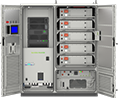
A BESS (Battery Energy Storage System) is an integrated solution that stores electrical energy and releases it when needed. Modern containerized BESS systems typically include:
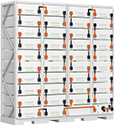
Lithium-ion battery packs
Battery Management System (BMS)
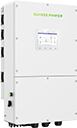
Power Conversion System (PCS)
Energy Management System (EMS)
HVAC thermal management
Fire suppression system
Smart monitoring platform
AC/DC distribution systems
Most commercial systems are designed in standard 20ft or 40ft containers for rapid deployment and scalability.
Typical BESS Specifications
| Parameter | Typical Range |
|---|---|
| Power Capacity | 100kW – 10MW+ |
| Energy Capacity | 200kWh – 20MWh+ |
| Battery Type | LFP (LiFePO4) |
| Voltage | 400V / 690V / 1500V |
| PCS Efficiency | >98% |
| Cycle Life | 6000–12000 cycles |
| Protection Rating | IP54/IP55/IP65 |
Understanding Peak Shaving and Valley Filling
Peak shaving and valley filling is an energy management strategy designed to optimize electricity consumption based on time-of-use (TOU) electricity pricing.
Peak Shaving
During peak electricity demand periods, utility prices rise significantly. BESS systems discharge stored energy to reduce grid consumption and lower demand charges.
Valley Filling
During off-peak hours when electricity prices are lower, the BESS charges from the grid or renewable energy sources.
This creates an energy arbitrage model that reduces electricity bills and improves energy efficiency.
How BESS Works in Peak Shaving Applications
Operational Logic
Charging Phase
Time: Midnight or low-demand periods
Electricity Price: Low
BESS Action: Charging
Discharging Phase
Time: Daytime peak hours
Electricity Price: High
BESS Action: Discharging
Simple Energy Flow
Savings=(P / peak−P / offpeak)×E / discharged−System Losses
Where:
= Peak electricity price
Poffpeak = Off-peak electricity price
Edischarged = Energy discharged from BESS
Why Peak Shaving Is Critical for Commercial & Industrial Facilities
Many industrial facilities experience extremely high demand charges due to sudden power spikes.
Industries with high peak demand include:
Manufacturing plants
Cold storage warehouses
Data centers
Mining operations
Textile factories
Food processing facilities
Shopping malls
Hospitals
EV charging stations
A properly sized BESS system can reduce transformer loading, stabilize power consumption, and dramatically lower monthly electricity costs.
Economic Benefits of BESS Peak Shaving Systems
1. Reduced Electricity Bills
The most direct benefit is reducing energy costs through:
Time-of-use optimization
Demand charge reduction
Energy arbitrage
In many regions, peak electricity pricing can be 2–5 times higher than valley pricing.
2. Faster ROI for Industrial Users
Typical ROI periods:
Europe: 3–5 years
Latin America: 2–4 years
Southeast Asia: 3–6 years
Africa: 4–7 years
Countries with unstable grids or high diesel dependence often achieve even faster payback periods.
3. Reduced Transformer Expansion Costs
Instead of upgrading transformers or grid infrastructure, companies can use BESS systems to handle temporary peak loads.
This avoids:
Expensive transformer upgrades
Utility penalty fees
Infrastructure reconstruction
4. Backup Power Capability
Modern BESS systems can also provide:
UPS functionality
Emergency backup power
Seamless switching
Black start capability
This is particularly valuable for:
Hospitals
Data centers
Telecom stations
Semiconductor factories
Key Technologies Inside Modern BESS Containers
Lithium Iron Phosphate (LFP) Batteries
LFP batteries dominate the ESS industry because of:
High safety
Long cycle life
Thermal stability
Lower fire risk
Lower maintenance cost
2. PCS (Power Conversion System)
The PCS converts:
AC to DC during charging
DC to AC during discharging
Advanced PCS features include:
Grid-forming capability
Reactive power compensation
Frequency regulation
Harmonic suppression
3. EMS (Energy Management System)
EMS acts as the brain of the system.
Functions include:
Peak shaving control
TOU scheduling
Remote monitoring
Cloud analytics
API integration
Renewable coordination
AI-based EMS platforms are increasingly using machine learning algorithms to predict energy demand and optimize battery dispatch.
Typical BESS Applications Beyond Peak Shaving
Commercial & Industrial ESS
Electricity bill reduction
Backup power
TOU optimization
Utility-Scale ESS
Renewable integration
Grid stabilization
Frequency regulation
Microgrid Systems
Off-grid power supply
Islanded operation
Diesel replacement
EV Charging Infrastructure
Fast charging support
Transformer capacity balancing
ROI Analysis Example
Consider a factory with:
Peak load: 1.5MW
Daily peak duration: 4 hours
Electricity price difference: $0.18/kWh
A 1MW/2MWh BESS system can potentially save:
Annual\ Savings = 2MWh \times 365 \times 0.18Annual Savings=2MWh×365×0.18
Estimated annual savings:
Approximately $131,400/year
This excludes:
Demand charge savings
Transformer upgrade savings
Backup power value
Actual ROI may therefore be significantly higher.
Future of Peak Shaving BESS Systems
The future of BESS technology will focus on:
Higher energy density
Safer battery chemistry
AI optimization
Virtual power plants (VPP)
Energy trading integration
As electricity markets become smarter, BESS systems will evolve from simple storage devices into intelligent energy assets.