Deploying energy storage systems in cold winter regions imposes challenges that often extend beyond mere installation completion. The core difficulty lies in achieving long-term stable operation in sub-zero environments. Cold temperature can affect cell activity and charge/discharge capabilities, while also potentially introducing engineering challenges such as condensation, moisture build-up, and thermal stress differentials, placing higher demands on the thermal management and control strategies of the storage system.
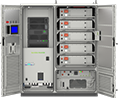
This case study showcases the GSL ENERGY liquid-cooling energy storage system (160kW / 418kWh) deployed at a customer site in Ukraine, where the inverter is installed indoors, and the battery cabinets are deployed outdoors. Under the local winter conditions of sustained low temperatures and snow/ice coverage, the system has maintained stable operation. The battery's internal heating and operational monitoring data have shown favorable performance.

Project Overview
The project site will be at low temperatures throughout the winter, requiring the energy storage equipment to operate long-term under outdoor severe conditions. During the planning phase, the customer explicitly stated the following requirements:
The energy storage batteries must support long-term outdoor operation.
The system must possess stable charge/discharge capabilities in low-temperature conditions.
Temperature control and operational status must be monitorable and traceable to facilitate future O&M management.
Based on site conditions and O&M needs, the project ultimately adopted a solution with the PCS inverter installed indoors and the battery energy storage system independently deployed outdoors. This ensured system stability while enhancing the flexibility of project implementation and future maintenance.

System Configuration
System Specification: 160kW/418kWh Battery
Battery Type: Lithium Iron Phosphate (LiFePO4), Liquid-Cooling Energy Storage System
Thermal Management Method: Active Liquid Cooling
Installation Method:
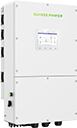
PCS Inverter: Indoor installation
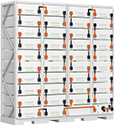
Battery Cabinets: Outdoor installation
Application Mode: Renewable Energy Integration/Backup Power/Load Regulation